Anthurium Crystallinum for Sale: What Buyers Should Check
An Anthurium crystallinum should have firm velvet leaves, clear veins, and roots that match the seller’s price. Ask for exact-plant photos before you buy.
Plantsnearby is reader-supported. As an Amazon Associate we earn from qualifying purchases. Learn more.
The short answer: Buy Anthurium crystallinum from photos of the exact plant. Check the leaf texture and veins, but also ask for root, stem, and newest-growth photos. A velvet leaf is appealing. A stable plant with honest shipping terms is the part that protects your money.
This guide is for buyers comparing Anthurium crystallinum listings. It also gives sellers a clear list of photos that make a collector plant easier to trust. Find or list plants on Plantsnearby with exact-plant images and simple condition notes.
Start with the exact plant and its label
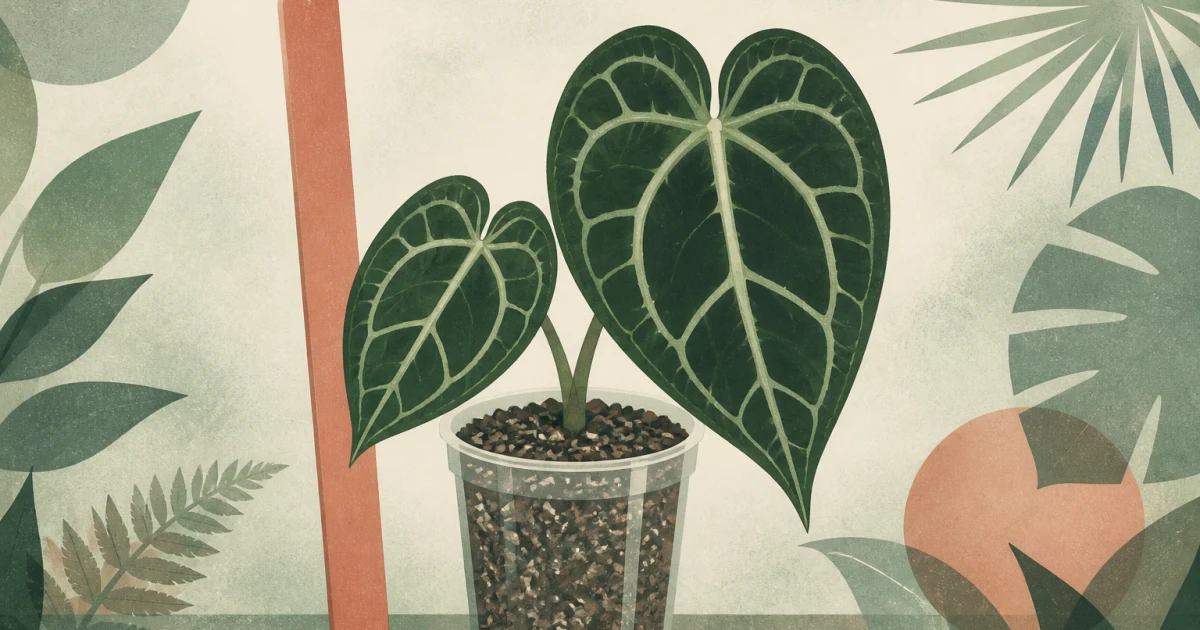
Anthurium crystallinum is known for dark, velvety heart-shaped leaves and pale veins. Young plants can look less dramatic than mature specimens. Light, humidity, and the age of a leaf all affect color, so do not identify a plant from one moody photo alone.
Ask what the seller is calling the plant and look at several current photos. A good listing does not need to make a grand claim. It should show the whole plant, a close view of the leaves, and enough context to understand its size.
If you are shopping the wider group of collector Anthuriums, start with our Anthurium buying guide. It covers the listing checks that matter even when the species name is not the only reason you are buying.
Check leaf condition without expecting perfection
Healthy crystallinum leaves are usually firm with a soft, velvety surface. Veins should be visible, though their contrast varies. A small blemish, a torn edge, or an older leaf with minor damage does not make the plant unhealthy.
Ask about black patches, translucent areas, yellowing, or brown damage spreading from the edge. Those may be travel scars, watering stress, or something more serious. The seller does not need to diagnose every mark. They should show it clearly and say whether it is stable.
Pay attention to the newest leaf. A new leaf can look lighter, softer, and less finished while it hardens. That is normal. A limp new leaf or a damaged emerging spear is worth asking about before you commit.
Ask for stem and root evidence
The leaf gets attention, but the roots decide whether the plant can settle into your home. Ask for a root photo if the plant is expensive, recently repotted, or listed as a rooted cutting. Clear pots make that easy. Otherwise, a seller can show the plant carefully out of its cachepot.
Firm roots in an airy mix are encouraging. A pot packed with very wet medium, a sour smell, or soft dark roots should slow the purchase down. Do not demand that every seller unpot a healthy plant for a low-cost sale. Match the amount of proof to the price and risk.
For a small cutting or juvenile plant, confirm where the next leaf will come from. A rooted piece should have a viable growth point, not only a leaf attached to a fading stem.
Compare size, leaf count, and maturity honestly
Prices can vary a lot because a small juvenile and a mature plant with wide leaves are not the same product. Compare the number of leaves, leaf size, pot size, and rooting status. Use a familiar object or stated measurement to avoid confusing a close-up leaf photo for a large plant.
Avoid comparing only the prettiest leaf. A two-leaf juvenile can be a sensible entry point if it is healthy and rooted. A mature plant should provide evidence for the higher price: current photos, clear leaf condition, a stable root system, and a safe handoff plan.
Rare labels do not replace these checks. Our rare plant listing guide has more questions to ask when the price makes a mistake expensive.
Look for pests before it joins your collection
Velvet leaves can hide early pest damage in photographs. Request a close view of the leaf backs and stem joints if you see pale speckling, webbing, or raised bumps. A seller who has recently treated a plant should say so plainly.
After purchase, keep the plant separate from your collection for a short time. Quarantining new plants is less exciting than opening a box, but it helps you spot trouble before it reaches every nearby leaf.
Do not assume a seller is careless because they show a minor cosmetic flaw. Honest disclosure is usually a better signal than a flawless image with no detail.
Choose pickup or shipping based on risk
Local pickup gives you the best chance to inspect a valuable crystallinum. You can see the leaf surface in normal light, look at the pot, and decide whether the size matches the listing. Keep the plant upright during the drive and protect the leaves from hot sun.
Shipping can work for smaller plants with firm leaves and a stable root ball. Ask how the seller will support the pot and shield foliage from rubbing. New leaves and large mature leaves are easier to bruise, so a weather hold may be the right call.
Read how to ship plants before agreeing to rush a package through heat or freezing weather. A safe delay is usually cheaper than a damaged-leaf dispute.
What sellers should include
Show the exact plant in full, a close shot of the front and back of a representative leaf, and the pot. Include approximate dimensions, leaf count, growing medium, and any condition issue that a buyer will see on arrival.
Say whether the plant is rooted, recently imported, or freshly repotted. Add a simple pickup and weather-hold note. You do not need dramatic sales language when your photos do the useful work.
Bottom line
Anthurium crystallinum is worth buying when the listing makes its condition easy to understand. Check the exact leaves, roots, stem, and plant size, then choose pickup or shipping that suits the weather. Velvet texture and bright veins are a bonus. Honest evidence is the reason to pay.
Frequently Asked Questions
How can I identify an Anthurium crystallinum listing?
Look for dark, velvety heart-shaped leaves with pale veins, but use the seller's label and exact-plant photos rather than leaf color alone.
What should I check before buying Anthurium crystallinum?
Ask for recent full-plant, leaf, stem, and root photos. Confirm plant size, growing medium, pests, and whether the plant is rooted or recently imported.
Does Anthurium crystallinum ship well?
Small established plants can ship with careful packing. Large velvet leaves and soft new growth can bruise, so weather holds and local pickup may be better for valuable specimens.